
What Happened
In the early hours of 26 August 2026, a wall of ice, rock, and water tore down from the mountains along the Nepal-China border. A catastrophic debris flow, most likely triggered by a sudden glacier slope failure in Langtang National Park, travelled nearly 100 km downstream along the Lende Khola and Trishuli Khola rivers, devastating everything in its path — including the Rasuwagadhi border crossing, a route that normally carried huge volumes of trade and pilgrimage traffic and accounted for roughly 30% of all Nepal-China trade before the disaster.
The scale of loss is still becoming clear. The confirmed death toll has climbed past 900, with more than 4,200 people still listed as missing, as rescue crews battle blocked and washed-out highways to reach the hardest-hit areas. Hundreds more were injured, and more than 10,000 households along the Trishuli corridor now need emergency shelter and relief supplies.
What makes this disaster so hard to process is how little warning there was. Nepal and China have maintained flash flood early warning systems for years, but this system wasn’t built to catch a glacier collapse — it was optimised for monsoon and seasonal river floods, and the monitoring stations closest to the source were swept away before any alert could go out. Scientists now widely agree the trigger was a glacier collapse, not rainfall — the skies were clear that morning.
The Bigger Picture: A Warming Himalaya
This tragedy did not come out of nowhere. The Himalayas are warming faster than the global average, and glaciers across the range have been thinning and retreating for decades. As global temperatures climb, the ice and permafrost that once held mountain slopes together are weakening — leaving unstable rock and ice sitting above valleys where people live, farm, and travel. Researchers studying this event have pointed to exactly that kind of slope failure as the likely cause, and disaster experts have warned that areas monitoring systems once considered low-priority are becoming genuine risks as the climate shifts. In short: places that were never flagged as flood-prone are becoming risks, because the mountains themselves are changing.
That’s a sobering thing to sit with. It’s also a reason the people who live in these valleys — herders, lodge owners, porters, guides — need support now more than ever, because the hazards they face are only becoming less predictable.
Difficulty on the Ground
Behind every number in this disaster is a family. Homes, hydropower stations, farmland, and the only roads connecting entire communities were destroyed in minutes. Reaching survivors has been the hardest part of the response — washed-out roads and destroyed bridges have left the worst-affected communities in Rasuwa extremely difficult to reach, which means shelter, clean water, food, and medical care are all slower to arrive than they’re needed. Aid is moving — international relief flights have already delivered emergency supplies to tens of thousands of affected people, alongside search-and-rescue teams on the ground — but recovery here will take months, not weeks, and rebuilding will take years.
Nepal Is Grieving — Not Closed
Here’s the part that gets lost in headlines: this disaster struck one specific, remote corridor — the Rasuwa district along the Nepal-China border, in the Langtang region. Nepal is a country roughly the size of England and Wales combined, with trekking regions, national parks, and cities spread across an enormous and geographically varied landscape.
The Everest region, the Annapurna range, Manaslu, Mustang, the Kathmandu Valley, Pokhara, Chitwan — the routes and towns that make up the vast majority of Nepal’s mountain tourism — are open, operating, and, frankly, need visitors this season more than ever.
That matters because so much of Nepal’s mountain economy runs on tourism. Guides, porters, teahouse and lodge owners, cooks, mule and yak handlers, small transport operators — entire villages along the trekking routes depend on the autumn and spring trekking seasons to get through the rest of the year. When people cancel trips to “the whole country” because of a disaster that struck one corridor, the damage spreads to communities the flood never touched — families who are already worried about the season ahead, now losing income on top of the compassion the world already owes the flood-hit region.
Visiting other parts of Nepal responsibly right now isn’t insensitive — it’s one of the most direct ways to support the country. Trekking fees, permits, lodges, guide wages, and local spending all put money straight into the hands of people whose livelihoods depend on the mountains.
We’re Still Going — And We Hope You’ll Join Us
At Namaste Nomad, we’re continuing to run our trips in Nepal this season, precisely because of everything above.
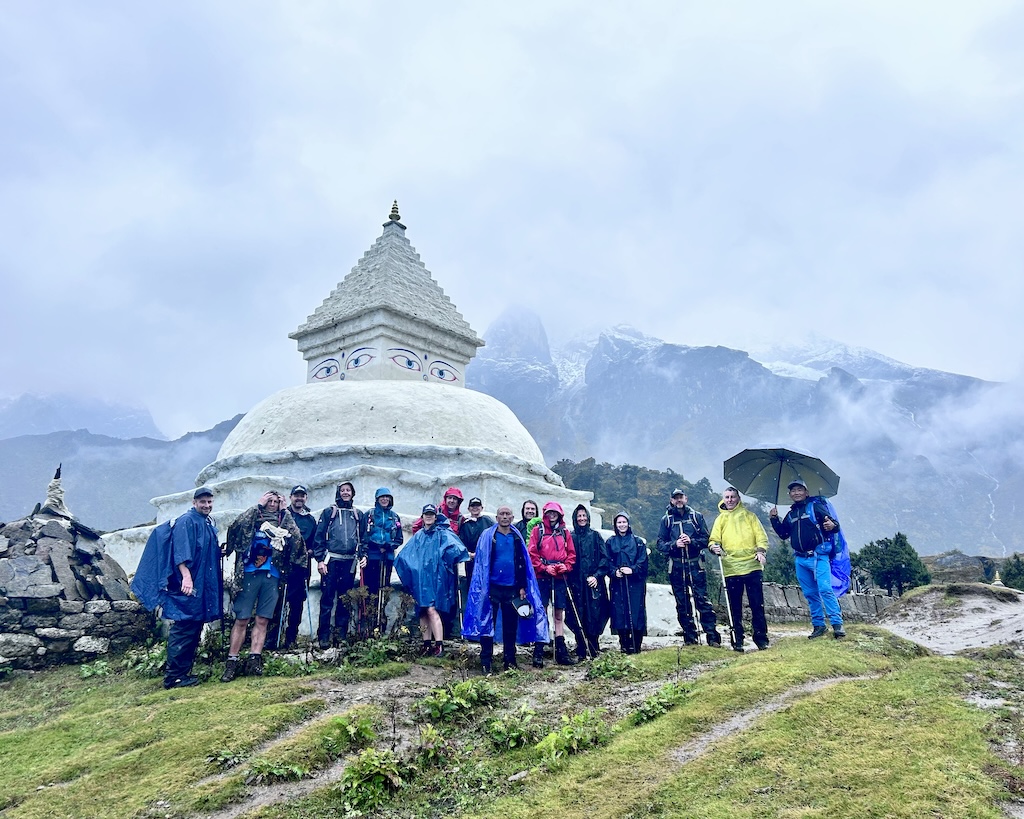
- October 2026 — our next Everest Base Camp Trek is going ahead as planned, taking trekkers through the Khumbu region to the foot of the world’s highest mountain, and supporting local guides, teahouses, and Sherpa communities along the way.
- January 2027 — we’re also hosting a research group of students from George Mason University (USA), who will be carrying out a research project in Nepal as part of an educational and cultural exchange trip.
Both trips are in regions completely unaffected by the flood, and both put real, direct support behind Nepali communities who are relying on this season.
Nepal is grieving right now, and that grief deserves space and respect. But Nepal is also open, welcoming, and — in the parts of the country where tourism continues — genuinely counting on people to keep showing up.
If you wish to help Nepal please donate directly to Nepal Govt link – https://pmdrf.nchl.com.np/
Ready to go? See the Everest Base Camp Trek – October 2026
Sources
- 2026 Nepal floods — Wikipedia
- Nepal-China flood disaster: latest toll — Al Jazeera
- Nepal flooding deaths surpass 900 — UN News
- 2026 Nepal Debris Avalanche and Flash Flood — USGS
- Nepal flash flooding — CNN
- Nepal flash floods 2026: CARE’s emergency response